Electronic Detection of Cellular Immunity
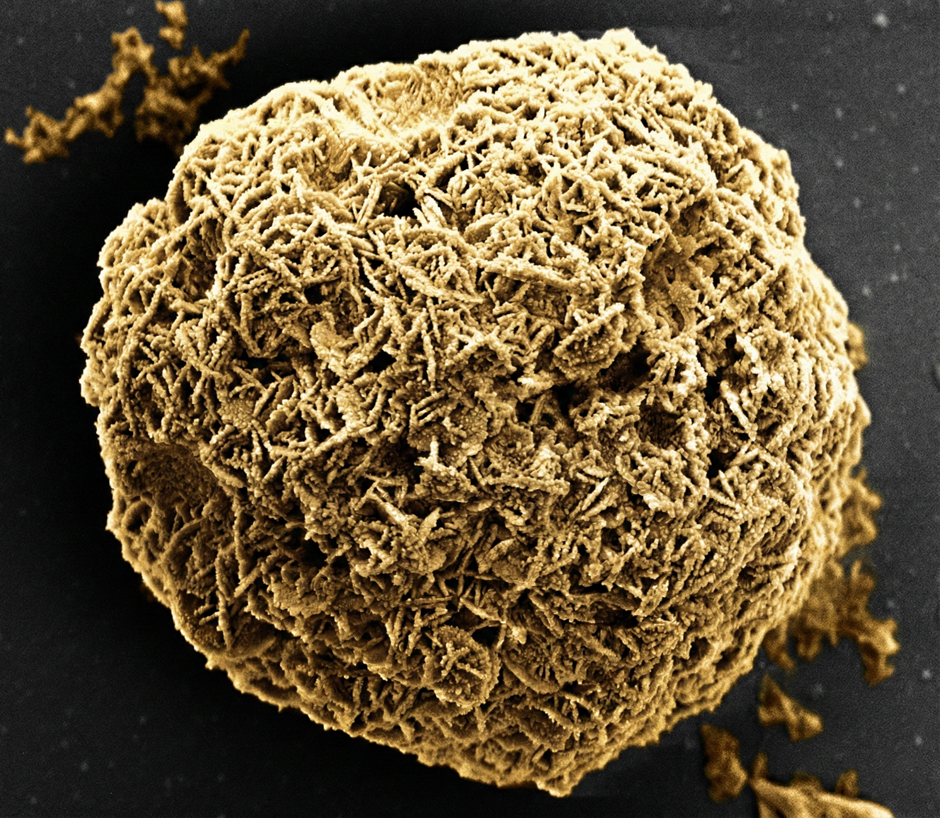
Precise detection of immune cell function at the single-cell level is critical for both diagnostic and research applications. However, conventional methods like flow cytometry rely on complex instrumentation and fluorescent labeling, limiting their accessibility in resource-poor settings. To address this, we developed a platform that combines antibody-directed enzymatic metallization with multifrequency impedance analysis. This approach allows for the electronic detection of surface markers and cytokine secretion without the need for optical labels.
Impedance Based Selective Microfluidic Electroporation
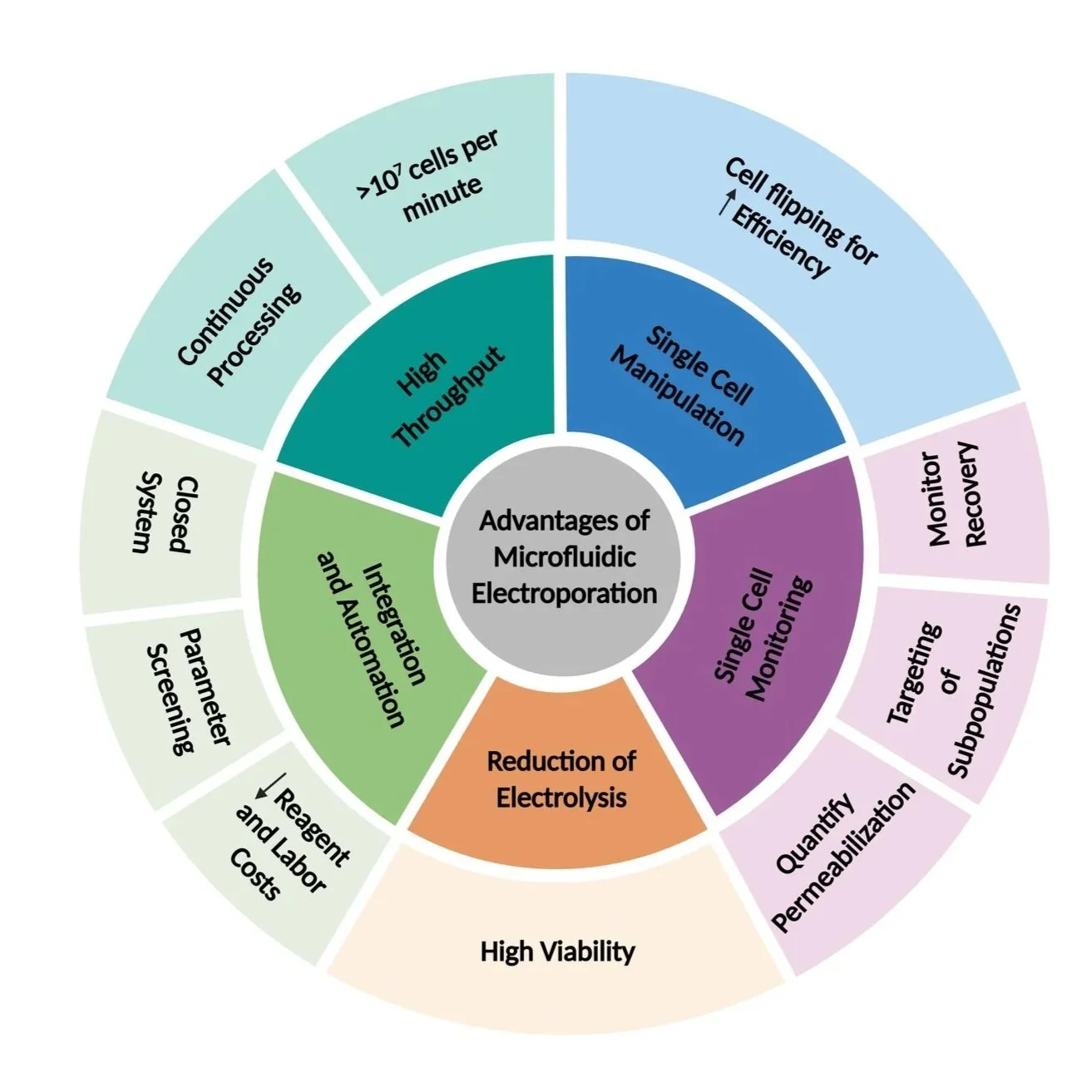
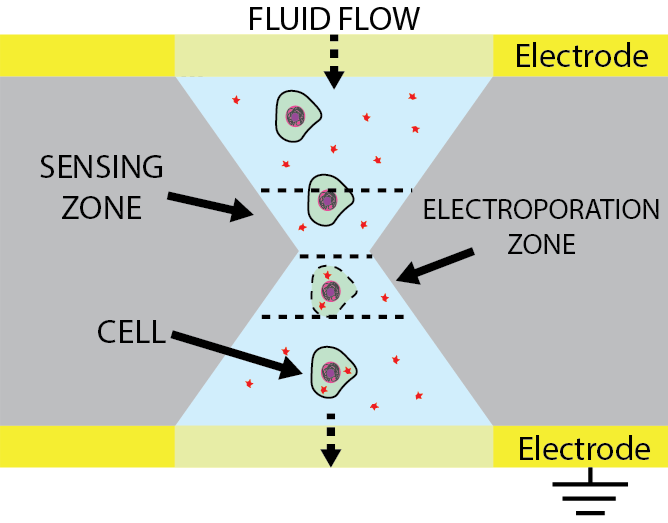
Cell therapies have radically transformed the treatment of cancer and have been shown to be efficacious in other diseases too. However, efficient, safe, and cell selective intracellular delivery remains a bottleneck for scalable and cost-effective manufacturing of cell therapies. Viral vectors are commonly used but significant unresolved concerns remain including high cost, payload limitations for larger cargos, and safety concerns. Physical methods to permeate the cell membrane, such as electroporation (EP), address many of the challenges associated with viral methods. We have developed a device that achieves Selective Permeabilization using Impedance Cytometry (SPICy). This couples multifrequency single cell impedance cytometry with real time, feedback controlled, low voltage single-cell electroporation. Impedance spectra are captured for each single cell and machine-learning based analysis enabled accurately distinguishing cells either in a label-free manner (by size), or via antibody-conjugated microparticles bound to the cell surface
Microscale 3D Printing
We are developing 3D-printed microfluidic devices optimized for impedance cytometry. Our fabrication capabilities include both direct 3D printing of devices and the creation of masters for PDMS casting using high-resolution 3D-printed molds.